
How to Maintain Concrete in Florida's Climate: A Keystone Homeowner's Guide
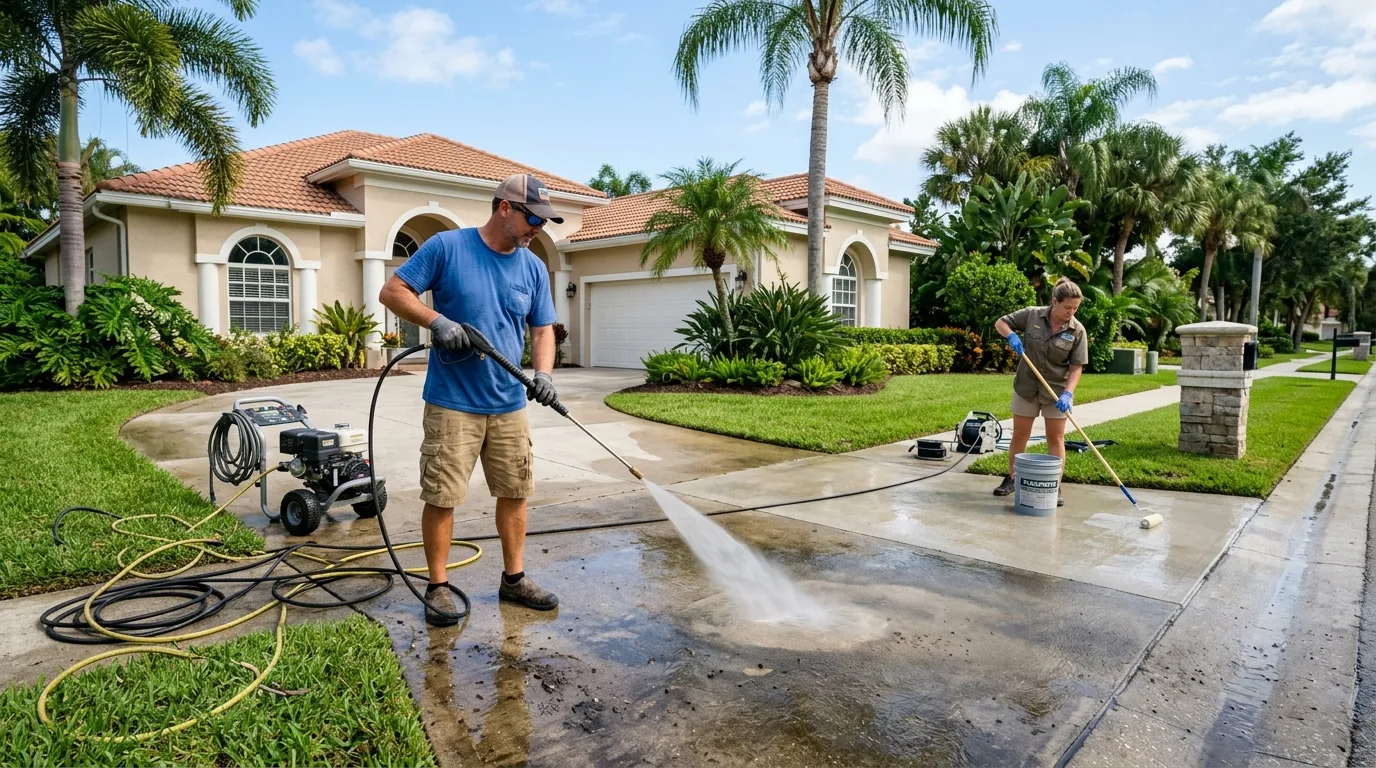
Florida’s climate is beautiful — but it’s also one of the most demanding environments for concrete in North America. Intense UV radiation, year-round heat, heavy summer rainstorms, occasional freeze events in the Tampa Bay Area, and salty air in coastal communities all take a toll on concrete. The good news: with the right maintenance habits, your concrete driveways, patios, and pool decks can look great and perform flawlessly for 30–50 years.
Here’s a Florida-specific concrete maintenance guide designed for Keystone and northwest Hillsborough County homeowners.
Is Your Concrete Due for Professional Attention?
Keystone Concrete offers concrete sealing, repair, and assessment for Keystone and Tampa Bay Area properties.
Why Florida is Uniquely Challenging for Concrete
Before diving into maintenance tips, it’s worth understanding what makes Florida’s concrete environment so demanding:
UV radiation: Florida receives some of the highest UV exposure in the continental US. UV breaks down the surface of unsealed concrete, causing fading, surface degradation, and increased porosity over time.
Heat and thermal cycling: Keystone’s summer temperatures regularly hit 90–95°F. Concrete expands in heat and contracts when temperatures drop. This thermal cycling stresses control joints and can widen existing cracks over time.
Summer storms: Hillsborough County averages 50+ inches of rain per year, much of it in intense summer storms. Pooling water accelerates surface wear and can erode sub-base material underneath driveways.
Sandy soil movement: Northwest Hillsborough County’s sandy soils can shift, especially when repeatedly wet and dry. This contributes to concrete settlement and cracking if the sub-base wasn’t properly prepared at installation.
Freeze events: Rare but real — Tampa Bay Area temperatures occasionally dip below freezing. While Florida doesn’t get the sustained freeze-thaw cycles that destroy northern concrete, even a single freeze event can widen existing cracks if water has infiltrated them.
Concrete Maintenance Schedule for Keystone Homeowners
Every Month
Visual inspection: Walk your driveway, patio, and pool deck looking for new cracks, surface changes, or drainage issues. Catching problems early is always cheaper than addressing advanced damage.
Cleaning: In Florida’s humidity, mold, mildew, and algae grow on concrete surfaces — especially in shaded areas. Monthly light cleaning prevents the buildup that causes staining and makes surfaces slippery.
Stain treatment: Address oil stains from vehicles, rust from irrigation systems, and organic stains from leaves quickly. Fresh stains lift much easier than set ones.
Every 6 Months
Pressure washing: A thorough pressure wash removes accumulated mold, mildew, dirt, and organic debris. Use 1,500–2,500 PSI — enough to clean effectively without damaging the surface. In Keystone’s humidity, bi-annual pressure washing is typically necessary; annual is minimum.
Drainage check: After heavy rain, confirm water is draining away from your home and not pooling against your foundation or in low spots on your driveway. Poor drainage is the single biggest long-term threat to concrete longevity.
Crack assessment: Check any known cracks for widening or growth. Mark their ends with a pencil line so you can tell if they’ve extended at the next inspection.
Every 2–3 Years
Resealing: This is the most important recurring maintenance task for Florida concrete. A quality penetrating concrete sealer:
- Repels water and prevents infiltration
- Blocks UV degradation of the surface
- Resists oil and stain penetration
- Reduces mold and mildew growth
- Significantly extends the life of your concrete
In Florida’s UV environment, plan to reseal every 2 years for pool decks and high-traffic areas, every 3 years for standard driveways and patios. See our detailed guide on why concrete sealing is essential in Florida.
Is Your Concrete Due for Sealing?
Keystone Concrete provides professional concrete sealing for Keystone, Odessa, Lutz, and the Tampa Bay Area.
Florida-Specific Cleaning Tips
Removing Mold and Mildew
Mold is Florida’s #1 concrete stain problem. A solution of 1 part white vinegar to 3 parts water, or a diluted bleach solution (1 cup bleach per gallon of water), kills mold and mildew effectively. Apply, let sit 10–15 minutes, scrub, and rinse thoroughly.
For severe mold, a commercial concrete cleaner designed for mold removal works better than DIY solutions. Always rinse completely — bleach residue can damage sealers and harm landscaping.
Removing Rust Stains
Rust stains from irrigation system heads or metal furniture are extremely common in Keystone and northwest Hillsborough County. Commercial oxalic acid-based rust removers work well on concrete. Apply per manufacturer instructions, scrub, rinse completely.
Removing Oil Stains
Fresh oil: cover with kitty litter or baking soda to absorb the oil, let sit several hours, sweep, then apply a commercial degreaser.
Old oil stains: A commercial concrete degreaser and scrubbing will lift most stains. Some deep stains may require multiple treatments or professional cleaning.
Organic Stains (Leaves, Berries, Dirt)
Florida’s lush landscaping produces constant organic debris that stains concrete, especially if left wet. Pressure washing at 2,000 PSI removes most organic stains. For stubborn stains, a concrete cleaner with oxygen bleach works without damaging the surface.
Crack Repair: When to DIY, When to Call a Pro
Small hairline cracks (less than ⅛ inch wide, stable): A concrete crack sealer from a hardware store is appropriate. Clean the crack thoroughly, apply the sealer, and allow to cure. This is effective maintenance, not a structural fix.
Cracks ¼ inch or wider: These warrant professional assessment. Wide cracks can indicate sub-base movement, and filling the surface without addressing the underlying cause provides only temporary improvement. See our full guide on repair vs. replacement for Florida concrete.
Cracks that are growing or sections that are moving: Call a professional immediately. Active structural movement needs diagnosis before any surface treatment.
Pool Deck Specific Maintenance
Keystone homeowners with pools face additional concrete maintenance considerations:
- Chemical exposure: Pool chemicals (chlorine, acid) can gradually damage unsealed concrete. A penetrating sealer is especially important around pool areas.
- Slip resistance: Regularly check that textured pool deck surfaces haven’t become smooth from wear. Resealing with a sealer that includes a slip-resistant additive maintains traction.
- Expansion joints: Pool decks have more expansion joints than driveways. Check these annually and reapply joint filler if the existing material has shrunk or cracked.
For more on pool deck options, see concrete pool decks in Tampa Bay.
Seasonal Florida Concrete Care
Summer (June–September): Rain season. Focus on drainage and mold prevention. Avoid sealing during rain season — the concrete needs to dry completely before sealer application.
Fall (October–November): Ideal time for sealing projects. Lower humidity, less rain, and milder temperatures make for optimal sealer application and curing conditions.
Winter (December–February): Inspect after any cold snap. While freezes are rare in Keystone, check for any cracks that widened overnight. Also a good time for cleaning since less biological growth is occurring.
Spring (March–May): Pre-rain-season maintenance — pressure wash, inspect, and address any repairs before summer storms begin.
When Professional Help is Needed
Contact a professional concrete contractor like Keystone Concrete when you observe:
- Cracks wider than ¼ inch or actively growing
- Sections of the slab that have shifted relative to each other
- Significant drainage problems after rain
- Surface spalling covering more than 20–30% of the slab
- Concrete that sounds hollow when tapped (possible sub-base voids underneath)
We serve Keystone, Odessa, Lutz, Land O’ Lakes, Tampa, and the entire Tampa Bay Area.
Need Professional Concrete Care in Keystone?
Keystone Concrete handles sealing, repair, and assessment for all concrete surfaces. Free estimates.