
Concrete Maintenance Tips Every Florida Homeowner Should Know
The rise of DIY home improvement content has led many Keystone and Tampa Bay Area homeowners to wonder: can I handle my own concrete maintenance? Sometimes the honest answer is yes — some concrete tasks are well within the reach of a motivated DIYer with the right preparation. But many concrete projects require professional expertise, equipment, and materials that aren’t available to consumers. Getting this wrong can result in concrete that fails prematurely, creating problems that cost far more to fix than the original project would have cost to do right.
This guide gives you an honest assessment of what you can realistically handle yourself and when calling a professional concrete contractor in Keystone is the clearly better choice.
Not Sure If You Need a Pro?
Call Keystone Concrete for a free consultation. We'll give you an honest assessment.
The Honest Challenges of DIY Concrete in Florida
Before listing what you can and can’t DIY, it’s important to understand that concrete is harder than it looks — and Florida adds extra challenges:
Concrete Works on a Tight Timeline
Once concrete is mixed or delivered, you have a limited working window — often 45–90 minutes before it becomes unworkable. This means you need everything perfectly prepared in advance: forms built, reinforcement placed, tools on-hand, and helpers ready. A mistake or delay with wet concrete in Florida’s summer heat means expensive waste.
Florida’s Heat Accelerates Setting
At 90°F+, concrete sets significantly faster than the textbook says. Professional contractors account for this by scheduling pours in the early morning, using ice water in the mix, or using set retarders. For the best timing of any concrete project, see our guide on the best time to pour concrete in Tampa Bay.
Subbase Preparation Is Critical
The subgrade beneath your concrete determines whether it will last 30+ years or crack in 5 years. Proper excavation depth, base compaction, and drainage design require knowledge and equipment most homeowners don’t have. In Keystone and Pasco County, proper drainage design is especially critical given the flat terrain and heavy summer rainfall.
Large Pours Are a Team Sport
Pouring and finishing a concrete driveway isn’t a one-person job. Depending on the size, you may need 2–4 experienced helpers, and everyone needs to know what they’re doing. Mistakes made by inexperienced helpers during the pour often can’t be corrected later.
Concrete Tasks That Are Reasonable DIY Projects
Concrete Crack Filling and Sealing
DIY-appropriate for: Hairline cracks and small cracks less than 1/4 inch wide with no displacement
This is the most accessible DIY concrete task. Products available at hardware stores (polyurethane crack fillers, concrete sealers) are effective for minor crack repair, and the technique is relatively simple.
What you’ll need: Wire brush, shop vac, concrete crack filler, trowel, safety glasses Realistic difficulty: Low to moderate Cost savings: $150–$400 compared to professional repair
Concrete Patching (Small Areas)
DIY-appropriate for: Small chips, corner breaks, or surface deterioration in areas less than 2 sq ft
Pre-mixed concrete patch products are effective for small repairs. The key is proper surface preparation — clean the area thoroughly, use a concrete bonding agent, and keep the repair moist during curing.
What you’ll need: Concrete patch mix, bonding agent, trowel, wire brush Realistic difficulty: Moderate Cost savings: $100–$300
Decorative Concrete Staining (Existing Surface)
DIY-appropriate for: Acid staining or water-based staining of existing, sound concrete
Staining existing concrete is achievable for patient DIYers. The prep work is critical (cleaning and etching), and you need to understand that acid staining results are somewhat unpredictable — the mottled, variegated look is part of the charm, but you can’t control exactly how it turns out.
Realistic difficulty: Moderate Cost savings: $1–$3 per sq ft compared to professional staining
Small Concrete Projects (Under 50 Sq Ft)
DIY-appropriate for: Small pad projects, stepping stones, small pathways under 50 sq ft
These smaller pours use bag concrete mix (available at hardware stores) and are feasible without a concrete truck. You’ll need a rented mixer or plan on a lot of hand mixing.
Realistic difficulty: Moderate to high Cost savings: $300–$800 compared to professional installation
When to Always Hire a Professional Concrete Contractor
Driveways
Always hire a professional. A concrete driveway is one of the larger investments in your home’s exterior, and professional results require:
- Proper subbase preparation with compaction equipment
- Correct concrete mix specification for Florida
- Efficient placement and finishing crew (time is critical)
- Control joint placement and cutting expertise
- Professional finishing equipment (power trowel, bull float, edger)
A DIY driveway that fails in 5–8 years will cost far more to demo and replace than the original professional installation would have cost. See our concrete driveway cost guide for Keystone for what professional installation typically costs.
Concrete Patios Over 200 Sq Ft
Large patio pours require a ready-mix concrete truck, a crew, and professional-grade finishing equipment. The concrete needs to be placed and finished in a coordinated way that isn’t feasible for most DIY teams.
Stamped or Decorative Concrete
Always hire a professional. Stamped concrete requires specialized tools, skill, and speed. The stamping must be done at exactly the right time during the concrete’s set — too early and patterns smear, too late and the stamps won’t impress deeply enough. Color application requires experience to achieve uniform results.
Professional stamped concrete contractors also carry the stamp patterns you want, which individually cost hundreds of dollars to purchase. For what professional stamped concrete looks like, see our stamped concrete patio ideas guide.
Pool Decks
Pool decks require proper drainage design, slip-resistant finishes, chemical-resistant sealing, and knowledge of expansion joint placement where the deck meets the pool coping. A DIY pool deck installation that fails creates water damage risks and safety hazards. See our concrete pool deck options guide for Tampa Bay.
Any Project Requiring a Permit
Projects in Pasco County that require permits generally must be done by a licensed contractor, or at minimum inspected by one. Unpermitted work creates problems when selling your home and may need to be torn out and redone. Read our full guide to concrete permits in Pasco County.
Foundation Work
Any concrete work involving your home’s foundation, stem walls, or structural elements should always be done by a licensed structural contractor. Incorrect foundation repair can compromise your home’s structural integrity.
Get a Professional Concrete Quote
Keystone Concrete serves residential and commercial clients throughout Keystone, Odessa, Lutz, and Tampa Bay.
The True Cost Comparison
Let’s compare a 600 sq ft concrete driveway in Keystone:
DIY total estimated cost:
- Concrete (ready-mix delivery): $1,800–$2,400
- Rebar/mesh reinforcement: $200–$400
- Form lumber: $150–$250
- Equipment rental (compactor, screed, etc.): $300–$500
- Tools you’ll need to purchase: $200–$400
- Sealer: $150–$300
- Total DIY: $2,800–$4,250
Professional installation total:
- All-inclusive professional installation: $4,500–$7,200 for standard broom finish
- Includes: materials, delivery, labor, base prep, sealer, cleanup, warranty
The actual savings: $250–$1,400 at best — and that’s if everything goes right with the DIY job.
When you factor in the risk of a failed DIY pour (requiring professional demolition and redo), the value of a contractor warranty, and the time investment (2–3 full days minimum), professional installation is often the more economical choice for projects of this scale.
Essential Maintenance Tips for Florida Concrete
Whether you installed your concrete yesterday or 10 years ago, these ongoing maintenance habits make a real difference:
- Seal on schedule — every 2–3 years for patios and driveways; every 1–2 years for pool decks and stamped concrete. See our concrete sealing guide for product recommendations.
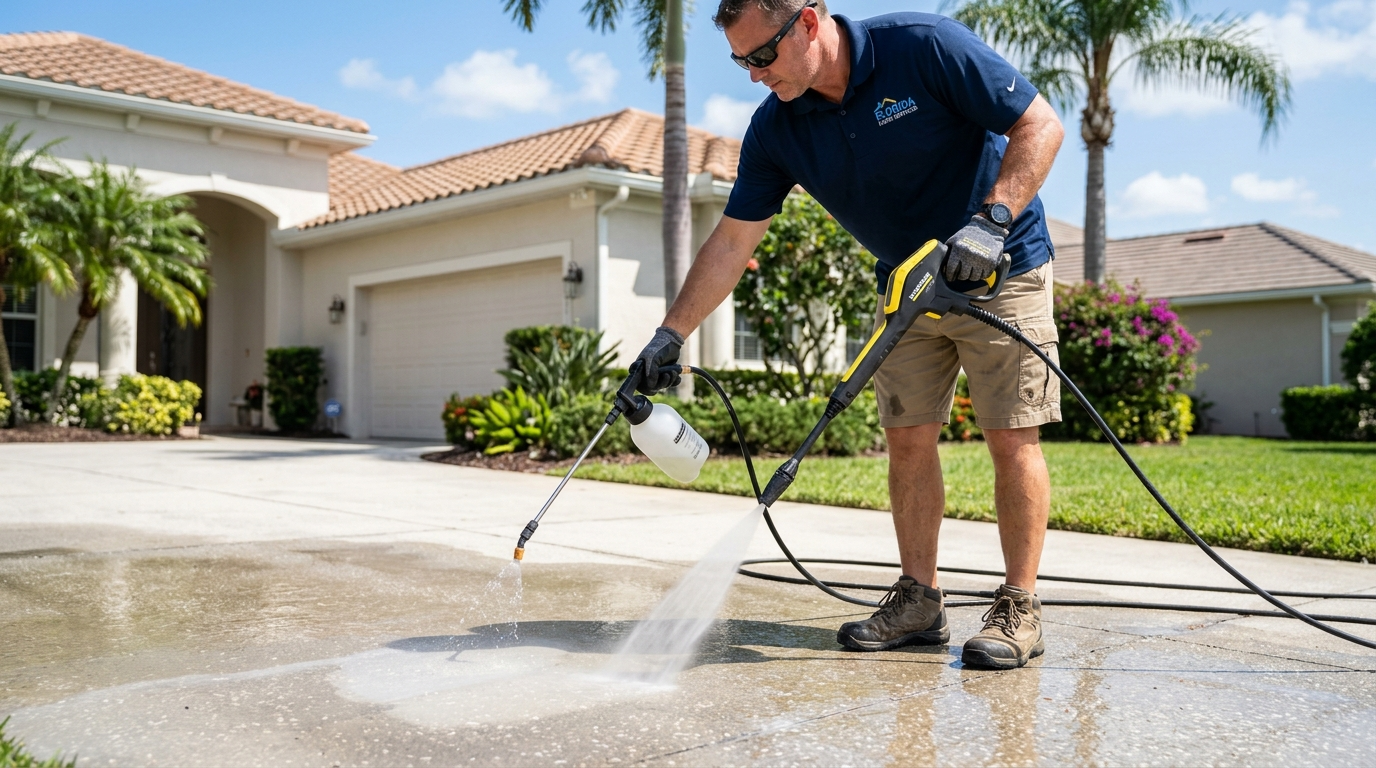
- Pressure wash twice a year — mold and mildew build up fast in Florida’s humidity
- Address cracks immediately — small cracks are cheap to seal; ignored cracks become expensive structural problems
- Watch your drainage — water pooling against concrete or your foundation is a warning sign
- Keep sprinklers off concrete — constant wetting accelerates deterioration
For a complete Florida-specific maintenance schedule, see our concrete maintenance guide for Florida homeowners.
We serve Keystone, Odessa, Lutz, Tampa, Land O’ Lakes, and all of Pasco County.
Ready to Get Your Project Done Right?
Contact Keystone Concrete for a free, no-obligation estimate. Serving Keystone, Odessa, Lutz, and the Tampa Bay Area.