
Concrete vs. Asphalt Driveways in Florida: Which Is Right for Keystone Homeowners?
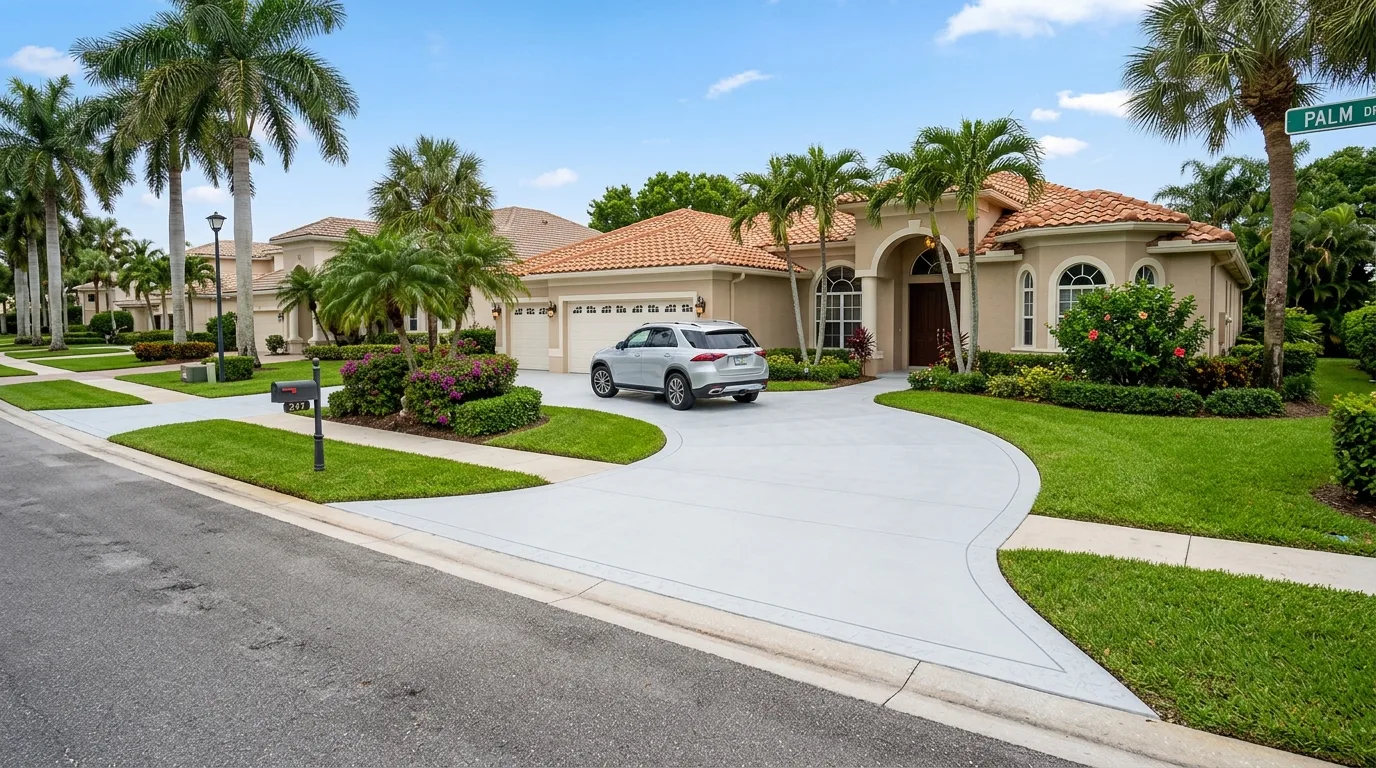
When planning a new driveway in Keystone, Odessa, or anywhere in the Tampa Bay Area, the most common fork in the road is: concrete or asphalt? Both are solid choices, but Florida’s specific climate strongly favors one over the other for most homeowners. This guide gives you an honest, detailed comparison.
Concrete or Asphalt? We Can Help You Decide.
Keystone Concrete installs quality concrete driveways throughout Keystone and the Tampa Bay Area. Free estimates.
The Short Answer for Florida Homeowners
For most Keystone and Tampa Bay Area properties, concrete is the better long-term investment. Florida’s intense heat is asphalt’s biggest enemy — asphalt softens significantly in our summer temperatures, making it more susceptible to deformation, tracking, and surface damage. Concrete performs far better in sustained heat.
That said, asphalt has genuine advantages in specific situations. Let’s look at the full picture.
Cost Comparison: Concrete vs. Asphalt in Keystone, FL
| Material | Installed Cost Per Sq Ft | 500 Sq Ft Driveway | Expected Lifespan in Florida |
|---|---|---|---|
| Asphalt | $3–$6 | $1,500–$3,000 | 15–25 years with maintenance |
| Standard concrete | $6–$12 | $3,000–$6,000 | 30–50+ years |
| Stamped concrete | $14–$22 | $7,000–$11,000 | 30–50+ years |
Asphalt costs roughly half as much upfront. But the lifetime cost equation looks different over 30 years:
Asphalt over 30 years (typical):
- Installation: $2,500
- Sealcoating every 3 years: $300 × 10 = $3,000
- Crack filling and maintenance: $500
- Possible replacement at year 20: $2,500+
- Total: $8,500–$10,000+
Concrete over 30 years (typical):
- Installation: $4,500
- Sealing every 3 years: $200 × 10 = $2,000
- Crack repair: $200
- Total: $6,700–$7,000
Over 30 years, properly maintained concrete is often less expensive than asphalt in Florida.
How Florida’s Climate Affects Each Material
Florida’s Heat: Asphalt’s Biggest Weakness
This is the most important factor for Keystone and Tampa Bay homeowners. Asphalt is a flexible petroleum-based material — which is also what makes it vulnerable to heat.
Softening: Florida summer temperatures regularly hit 90–95°F, with asphalt surface temperatures reaching 120–160°F in direct sun. At these temperatures, asphalt softens enough that heavy vehicles (SUVs, trucks, RVs) can leave depressions or ruts — especially near areas where vehicles sit stationary, like in front of garage doors.
Tracking: Softened asphalt can track onto garage floors, shoes, and inside your home during summer months.
UV degradation: Asphalt oxidizes in UV radiation, turning brittle and gray over time. Florida’s intense sun accelerates this process significantly. Sealcoating every 2–3 years is required to maintain asphalt in Florida — without it, the surface deteriorates rapidly.
Conclusion: In Florida’s summer heat, asphalt simply doesn’t perform as well as in cooler climates where it’s the dominant driveway material.
Florida’s Heat: Concrete’s Advantage
Concrete is a rigid material with a much higher heat tolerance. It doesn’t soften or deform in Florida temperatures. However:
Surface temperature: Light-colored concrete gets hot in direct Florida sun — though not as hot as asphalt. Dark concrete or concrete with iron pigments can get extremely hot barefoot.
Thermal expansion: Concrete expands significantly in heat and contracts in cool weather. This is why control joints are critical — without them, thermal cycling will crack any concrete slab. Properly installed concrete with adequate control joints handles Florida’s thermal demands well.
Florida’s Rain: Both Materials Handle Well (With Caveats)
Florida’s 50+ inches of annual rainfall is a key consideration:
Asphalt: Slightly more flexible, less prone to cracking from water infiltration. However, asphalt is permeable — water infiltrates through the surface and can erode the base material over time, particularly in Florida’s sandy soil conditions.
Concrete: Properly sealed concrete is highly resistant to water infiltration. However, concrete cracks can allow water to penetrate and, in Florida’s climate, accelerate base erosion under the slab.
Both materials require proper drainage design — perhaps more important than the material choice itself in Hillsborough County’s flat terrain.
Get a Free Driveway Estimate for Your Keystone Property
Keystone Concrete explains all your options and helps you make the right choice. Free, no-pressure estimates.
Maintenance Requirements: Concrete vs. Asphalt in Florida
Asphalt Maintenance in Florida
- Sealcoating: Required every 2–3 years (every 2 years recommended in Florida’s climate) — $0.15–$0.30/sq ft
- Crack filling: Annual inspection and filling recommended
- Patching: As needed for potholes or failed sections
- Oxidation treatment: Special products to reverse UV-related brittleness
Concrete Maintenance in Florida
- Sealing: Recommended every 3 years for driveways (2 years for pool decks and areas with more UV exposure) — see our concrete sealing guide for Florida
- Crack treatment: Minor cracks can be sealed; major cracks warrant professional assessment (see repair vs. replacement guide)
- Cleaning: Annual pressure washing for mold/mildew in Florida’s humidity
Appearance: What Fits Keystone’s Aesthetic?
Keystone’s character — a mix of larger residential properties with a semi-rural, upscale feel — generally favors concrete’s cleaner, more finished appearance. Asphalt works well for basic utilitarian driveways; concrete offers design versatility:
- Broom finish for a classic, traditional look
- Exposed aggregate for a natural stone appearance
- Stamped concrete for premium curb appeal that rivals pavers at lower cost
For Keystone properties with circular driveways, extended approaches, or features like turnarounds, stamped or exposed aggregate concrete creates significantly better curb appeal than asphalt.
When Asphalt DOES Make Sense for Florida Homeowners
Despite concrete’s advantages in our climate, asphalt may be the right choice in specific situations:
- Very large driveways where budget is constrained: If you need 2,000+ square feet paved and budget is the primary concern, asphalt’s lower upfront cost may be compelling despite higher lifetime cost
- Utility/secondary driveways: Driveways to detached garages, agricultural buildings, or service areas where appearance and longevity matter less
- Temporary solutions: If you’re planning major landscaping or home improvements that will affect the driveway area, asphalt as a temporary surface makes sense
- Shaded properties: In areas with significant tree canopy, asphalt performs better — cooler surface temperatures and shade protecting from UV oxidation
The Verdict for Keystone and Tampa Bay Homeowners
For primary driveways in Keystone, Odessa, Lutz, Land O’ Lakes, and the Tampa Bay Area: concrete is the better investment for most homeowners, particularly those planning to stay in their home for 10+ years. The higher upfront cost is offset by longer lifespan, lower maintenance costs, and significantly better performance in Florida’s heat.
For more on concrete driveway costs in Keystone specifically, see our complete pricing guide. For installation details, see how concrete driveways are installed in Florida.
We serve Keystone, Odessa, Lutz, Tampa, New Port Richey, and all surrounding communities.
Ready to Choose Concrete for Your Keystone Driveway?
Get a free, no-obligation estimate from Keystone Concrete. We serve the entire Greater Tampa Bay Area.