
Concrete Sidewalk Installation: Costs, Codes, and What to Expect in Florida
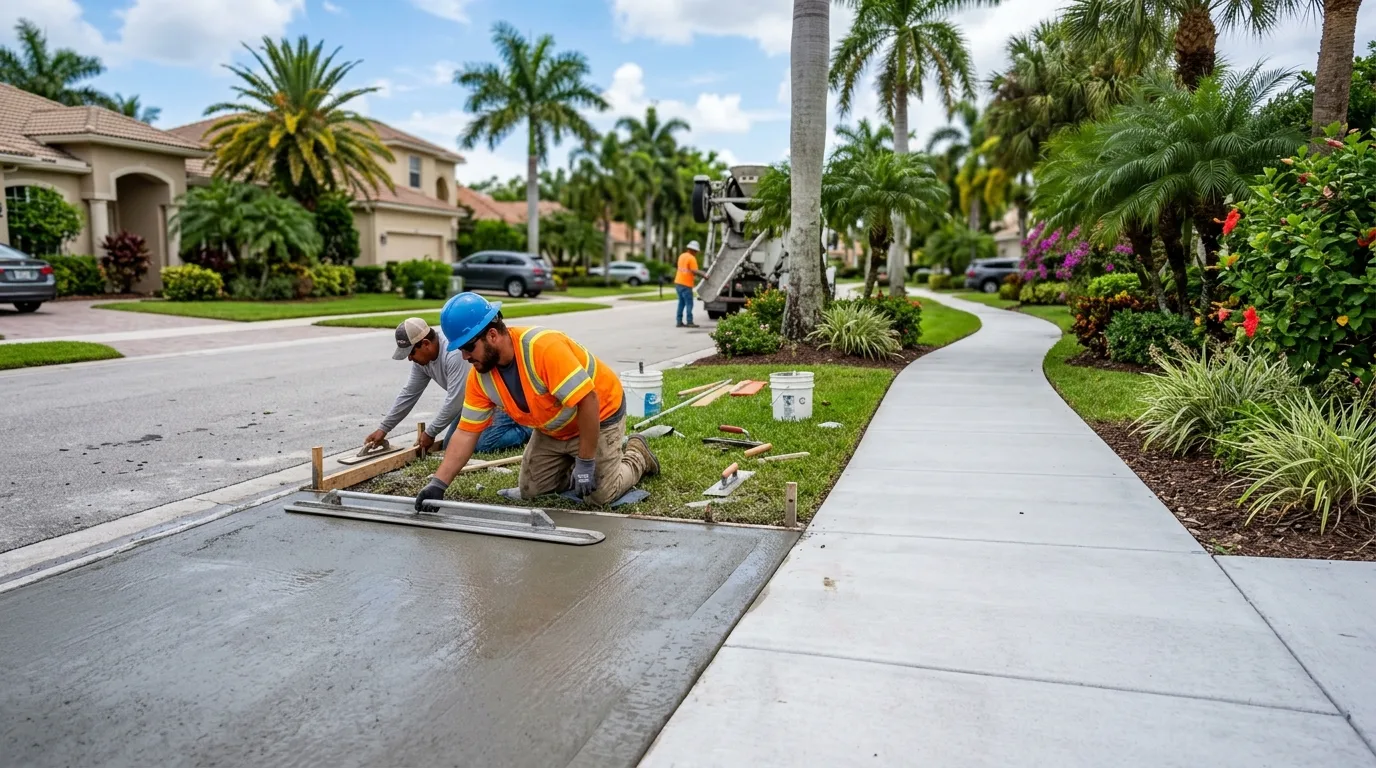
A concrete sidewalk might seem like a simple project, but there’s more to a quality installation than pouring concrete and calling it done. In Florida — and in Pasco County specifically — sidewalk projects involve considerations around local codes, ADA accessibility requirements, drainage design, and the challenges of Florida’s climate. This guide walks Keystone homeowners through everything they need to know before starting a sidewalk project.
Get a Free Sidewalk Estimate
Keystone Concrete installs durable concrete sidewalks throughout Keystone, Pasco County, and the Tampa Bay Area.
Concrete Sidewalk Installation Cost in Florida
For Keystone and the greater Tampa Bay Area, concrete sidewalk installation typically runs:
| Sidewalk Type | Cost Per Sq Ft | 200 Sq Ft Sidewalk |
|---|---|---|
| Standard broom-finish concrete | $5–$8 | $1,000–$1,600 |
| Exposed aggregate | $8–$12 | $1,600–$2,400 |
| Stamped or decorative | $12–$18 | $2,400–$3,600 |
| Colored concrete | $7–$11 | $1,400–$2,200 |
These figures reflect 2025 pricing in the Pasco County and Hillsborough County markets and include standard site preparation, forming, concrete, and basic finishing. Additional costs may apply for:
- Removal of existing sidewalk or asphalt: $1–$3 per square foot
- Complex grading or drainage work: $500–$2,000+
- ADA-compliant curb cuts or ramps: $500–$1,500 per ramp
- Permits: Variable (see below)
The Concrete Sidewalk Installation Process
Understanding what happens during installation helps you set realistic expectations and ask the right questions of your contractor.
Step 1: Site Preparation and Grading
The area where the sidewalk will go must be excavated to the proper depth (typically 4–6 inches of total excavation to accommodate base material and concrete thickness). The sub-base is graded and compacted. In Florida’s sandy soils — common throughout Pasco County and Keystone — this step is especially important because loose sand can shift, especially after the wet-dry cycling of Florida’s rainy seasons.
For sidewalks that run along the side of a home or near a foundation, the grade is designed to carry water away from the structure. This is non-negotiable in Florida’s high-rainfall environment.
Step 2: Base Material
A layer of compacted gravel or crushed base material is placed over the subgrade. This provides a stable, well-draining foundation for the concrete. In areas with softer or more variable soils, a thicker base layer may be required.
Step 3: Forming
Wood or metal forms are set to define the sidewalk’s width and establish the correct height and slope. Standard sidewalk widths are 3–4 feet for residential use; paths designed for two-way pedestrian traffic or ADA-compliant pathways are typically 5 feet minimum.
The forms establish the cross-slope — sidewalks should slope slightly (typically 1–2%) to drain water off the surface and prevent pooling. In Florida, this is critical to prevent the standing water that accelerates surface wear and promotes mold growth.
Step 4: Reinforcement
Standard residential sidewalks typically use fiber reinforcement mixed into the concrete (for crack resistance) or wire mesh placed in the forms. For heavier-use applications or areas with more variable soils, rebar may be used instead.
Step 5: Concrete Pour and Finishing
Ready-mix concrete is poured into the forms, screeded level, and finished. The finish choice affects both appearance and performance:
- Broom finish: Standard residential choice — provides excellent slip resistance even when wet. The most appropriate choice for most Keystone sidewalks.
- Exposed aggregate: More texture, attractive appearance, very durable. Good choice for entry paths and decorative areas.
- Stamped concrete: Premium appearance for high-visibility areas like front entry paths.
Professional Sidewalk Installation in Keystone
Keystone Concrete builds sidewalks that look great and hold up in Florida's climate. Free estimates.
Step 6: Control Joints
Control joints are tooled or saw-cut into the concrete at regular intervals (typically every 4–6 feet for a 4-foot-wide sidewalk). These intentional weakened lines guide where the concrete cracks as it cures and as temperatures change — keeping cracks straight and predictable rather than random.
Step 7: Curing and Sealing
Concrete must cure properly — in Florida’s heat, this means keeping the surface moist or applying curing compound to prevent premature drying and surface cracking. After full cure (28 days), sealing is strongly recommended. A penetrating concrete sealer protects against Florida’s UV radiation, rain infiltration, and biological staining. Learn more in our concrete sealing guide for Florida homeowners.
Pasco County Codes and Permit Requirements for Sidewalks
Sidewalk permit requirements in Pasco County depend on the project:
Public right-of-way: Any sidewalk work within a public right-of-way (the strip of land between your property line and the street) typically requires a right-of-way utilization permit from Pasco County. This applies whether you’re building new or replacing existing sidewalk in this area.
Private property: Sidewalks entirely on private property connecting to a public sidewalk at grade typically do not require a permit in Pasco County, as long as they don’t alter drainage patterns significantly or exceed thresholds for structural work.
HOA requirements: Many Keystone-area communities have HOAs with their own rules about sidewalk materials, finishes, and layouts. Always check HOA requirements before starting.
For a complete overview of concrete permit requirements in Pasco County, see our concrete permits in Pasco County guide.
ADA Compliance for Florida Sidewalks
The Americans with Disabilities Act (ADA) requirements apply to sidewalks in public areas, commercial properties, and multi-family housing. Key ADA requirements relevant to Florida sidewalk projects include:
- Minimum width: 36 inches clear width, with 60-inch passing spaces every 200 feet on narrower paths
- Cross-slope: Maximum 2% cross-slope (across the direction of travel) to allow wheelchair use
- Running slope: On accessible routes, maximum 5% running slope (in the direction of travel) — steeper grades require handrails
- Surface: Stable, firm, and slip-resistant — properly finished concrete meets this requirement
- Curb ramps: Where sidewalks meet driveways or streets, ADA-compliant curb cuts or ramps are required
For private residential sidewalks, ADA compliance isn’t legally required — but designing with accessibility in mind benefits all users and improves the usability of your property.
Drainage Considerations for Florida Sidewalks
Florida’s frequent and intense rainfall makes drainage design a critical factor in sidewalk longevity. Poorly drained sidewalks in Pasco County face:
- Surface erosion: Standing water washes fine material from under the slab’s edges
- Sub-base erosion: Water infiltrating beneath the slab erodes the base and causes settling
- Mold and staining: Standing water promotes algae, mold, and organic staining on the surface
For Keystone properties, key drainage principles for sidewalks include:
- Grade away from structures: The sidewalk surface should direct water away from your home’s foundation
- Don’t create a dam: A sidewalk shouldn’t block natural sheet-flow drainage across your property
- Consider swales and inlets: In areas that naturally collect water, drainage features alongside the sidewalk prevent ponding
- Coordinate with irrigation: Sprinkler heads pointing directly at concrete accelerate deterioration and staining
For more on maintaining concrete in Florida’s climate, see our concrete maintenance tips for Florida homeowners and how long concrete lasts in Florida’s climate.
We serve Keystone, Odessa, Lutz, Land O’ Lakes, Wesley Chapel, and all of Pasco County.
Get Your Free Sidewalk Estimate in Keystone
Keystone Concrete builds sidewalks that last in Florida's climate. Free on-site estimates for Keystone and Pasco County.