
Why Concrete Sealing is Essential in Florida: A Keystone Homeowner's Guide
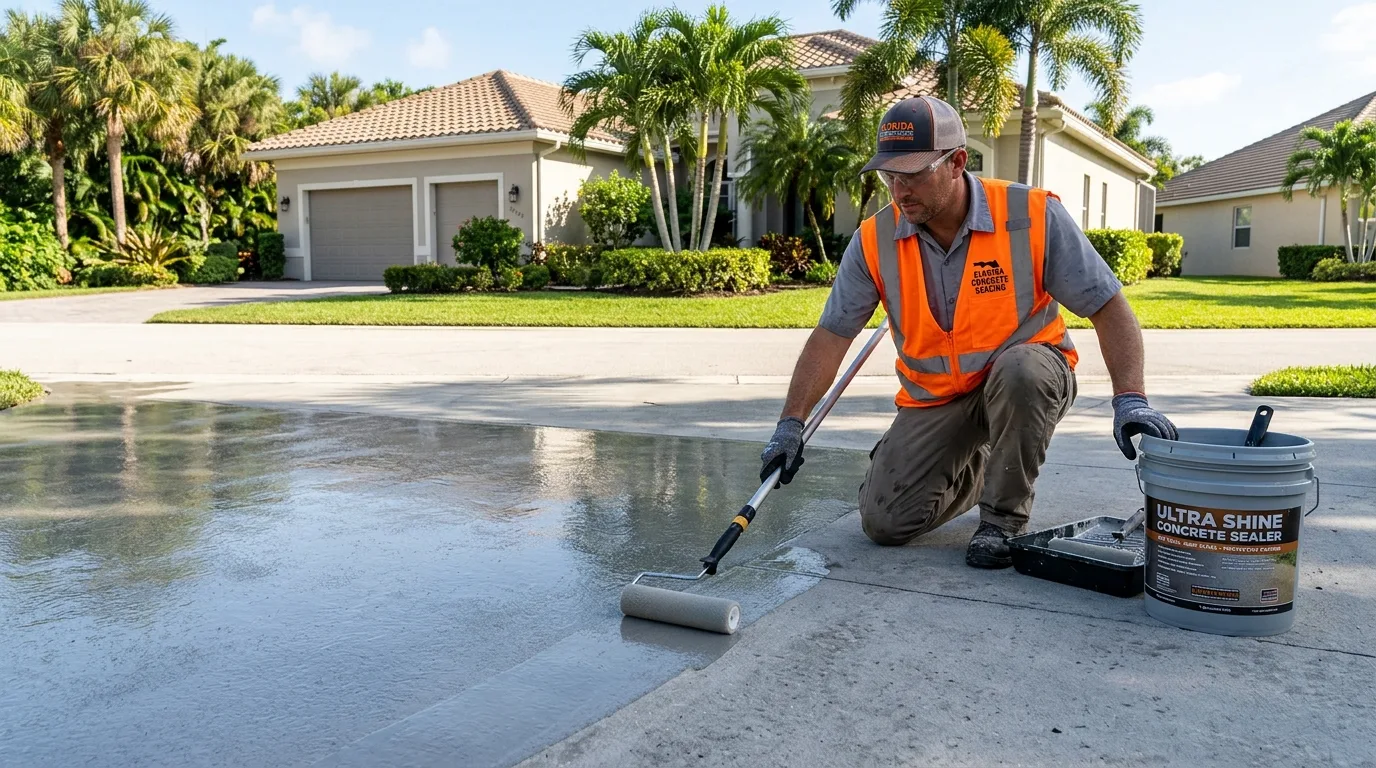
If you live in Keystone or anywhere in the Tampa Bay Area, concrete sealing isn’t optional maintenance — it’s essential. Florida’s combination of intense UV radiation, year-round heat, heavy summer rain, and biological growth creates conditions that degrade unsealed concrete significantly faster than in virtually any other US climate. This guide explains what sealing does, which products work best in Florida, and how to keep your concrete protected year after year.
Professional Concrete Sealing in Keystone
Keystone Concrete provides professional concrete sealing for driveways, patios, and pool decks throughout the Tampa Bay Area.
What Concrete Sealing Actually Does
Concrete looks solid and impenetrable, but it’s actually quite porous. Under a microscope, concrete is full of tiny interconnected pores that allow water, oil, chemicals, and biological organisms to penetrate the surface. Sealing closes or lines these pores, creating a barrier that:
Blocks water infiltration: Water inside concrete causes multiple problems — freeze damage (rare but possible in Keystone during cold snaps), chemical reactions that degrade the concrete matrix, and carrying of dissolved salts that cause surface spalling.
Resists UV degradation: Florida’s UV radiation gradually breaks down the concrete surface — a process called photo-oxidation. Unsealed concrete becomes increasingly porous and structurally weak over time. A good sealer blocks UV penetration and dramatically slows this process.
Prevents staining: Once a stain penetrates concrete, it’s very difficult to remove. A sealer creates a surface barrier that allows you to wipe or wash away oil, grease, rust, and organic stains before they bond to the concrete.
Inhibits mold and mildew: In Keystone’s humidity, mold grows on virtually every porous surface. Sealed concrete provides less moisture and fewer nutrients for biological growth, significantly reducing the mold problem that plagues unsealed driveways and patios in our climate.
Enhances appearance: Many sealers add a slight sheen that makes concrete colors richer and more vibrant, and can bring out the texture of stamped or exposed aggregate finishes beautifully.
Types of Concrete Sealers: What Works Best in Florida
Not all sealers are appropriate for Florida’s climate. Here’s a breakdown:
Penetrating Sealers (Best for Florida)
Penetrating sealers (silanes, siloxanes, silicates) chemically bond with the concrete matrix inside the pores rather than forming a film on the surface. For Florida conditions, these are generally the best choice for driveways and most outdoor horizontal surfaces:
- Don’t create a slippery film surface
- Don’t peel, flake, or require stripping for reapplication
- Highly durable — last 5–10 years in some applications
- Don’t significantly change the concrete’s appearance
- Excellent UV resistance
Best for: Driveways, pool decks, outdoor walkways in Keystone and the Tampa Bay Area
Acrylic Sealers
Water-based or solvent-based acrylics form a thin protective film on the surface. They’re available in matte, satin, or gloss finishes and can dramatically enhance concrete’s appearance. Downsides: require reapplication every 1–3 years and can become slippery when wet if a non-slip additive isn’t included.
Best for: Stamped concrete patios and decorative concrete where appearance enhancement is important. Always request a non-slip additive for pool decks and wet areas.
Epoxy Sealers
Thick, durable two-part coatings that provide excellent chemical resistance. Popular for garage floors and commercial settings. Less commonly used for exterior Florida concrete because they’re more susceptible to UV yellowing and can trap moisture if applied to concrete that’s not fully dry.
Best for: Garage floors and covered concrete areas
Polyurethane Sealers
Similar to acrylics but more flexible and durable. Better UV resistance than epoxy. Good choice for stamped concrete in areas with some sun exposure.
Best for: Covered patios, decorative concrete with moderate sun exposure
Not Sure Which Sealer Is Right for You?
Keystone Concrete recommends the best sealer for your specific concrete type and Florida environment. Contact us for a free consultation.
Sealing Schedule for Keystone and Tampa Bay Homeowners
| Concrete Surface | Sealing Frequency |
|---|---|
| Standard driveway (penetrating sealer) | Every 3–5 years |
| Stamped concrete patio (acrylic) | Every 1–2 years |
| Pool deck | Every 2 years minimum |
| Garage floor (epoxy) | Every 3–5 years |
| Outdoor walkways | Every 2–3 years |
Florida’s more aggressive climate means you should be at the shorter end of these ranges compared to general recommendations you’ll find online (which are often based on northern US climate assumptions).
Signs Your Concrete Needs Resealing
You don’t need to stick rigidly to a calendar — look for these signs that your concrete sealer has worn through:
The water test: Sprinkle water on the surface. If it beads up and rolls off, the sealer is working. If it soaks in within seconds, the sealer has worn through and it’s time to reseal.
Surface appears dull or faded: A fresh coat of sealer typically restores depth and richness to concrete color. If your stamped patio looks washed out, resealing will make a dramatic difference.
Staining is occurring more easily: If oil from a car is soaking in immediately rather than staying on the surface, the sealer barrier is gone.
Mold is growing more aggressively: Increased mold growth — especially in shaded areas — often indicates the sealer is no longer repelling moisture effectively.
For pool decks: The surface feels rougher than usual — this can indicate the sealer top layer has worn off.
DIY vs. Professional Sealing
Some homeowners successfully seal their own concrete. When DIY works:
- The surface is clean, dry, and in good condition
- You’re applying a water-based acrylic to a simple, accessible surface
- Temperature and humidity are appropriate (not during rain season or in extreme heat)
- You have time to properly prepare the surface (cleaning, etching if necessary)
When professional sealing makes more sense:
- Large or complex surface areas
- Pool decks requiring specific products and non-slip additives
- Stamped concrete requiring careful product selection to avoid flaking over textures
- Surfaces that need cleaning, etching, or crack repair before sealing
- If the existing sealer needs to be stripped before reapplication
Professional sealing costs $1.50–$3.00 per square foot in the Keystone/Tampa Bay market depending on surface type and product.
Before You Seal: Surface Preparation
This is where most DIY sealing failures happen. Before any sealer is applied:
-
Clean thoroughly: Pressure wash the surface at 2,000–2,500 PSI to remove dirt, mold, efflorescence, and oil stains. Allow to dry completely — ideally 24–48 hours in Keystone’s humidity.
-
Repair cracks: Fill any cracks with an appropriate concrete crack sealer before applying surface sealer. Sealing over open cracks traps water and can cause delamination.
-
Strip existing sealer if needed: If the old sealer is peeling, flaking, or worn unevenly, it must be stripped or mechanically prepared before applying a new coat. Applying sealer over failing sealer leads to premature failure.
-
Check moisture content: New concrete must cure fully (28 days minimum) before sealing. Existing concrete must be dry — a simple test is taping plastic sheeting to the surface for 24 hours; moisture condensing under the plastic means it’s not ready.
Concrete Sealing and Florida’s Rain Season
Timing matters. The ideal time to seal concrete in Keystone is:
Best: Fall (October–November) — lower humidity, less rain, temperatures in the 70s–80s Good: Late winter/spring (February–May) — before the rainy season, lower humidity Avoid: Summer rain season (June–September) — high humidity and frequent rain make proper application and curing difficult
For more guidance on timing your concrete work with Tampa Bay’s seasons, see our guide on the best time to pour concrete in the Tampa Bay area. For more on year-round concrete care, see our full concrete maintenance guide for Florida homeowners. And for more on the full concrete installation process, see our guide to concrete slabs in Pasco County.
We provide professional sealing services throughout Keystone, Odessa, Lutz, Land O’ Lakes, Wesley Chapel, and the entire Tampa Bay Area.
Professional Concrete Sealing for Your Tampa Bay Property
Keystone Concrete seals driveways, patios, and pool decks throughout Keystone, Odessa, Lutz, and Tampa Bay. Get a free quote.