
Best Time of Year to Pour Concrete in the Tampa Bay Area
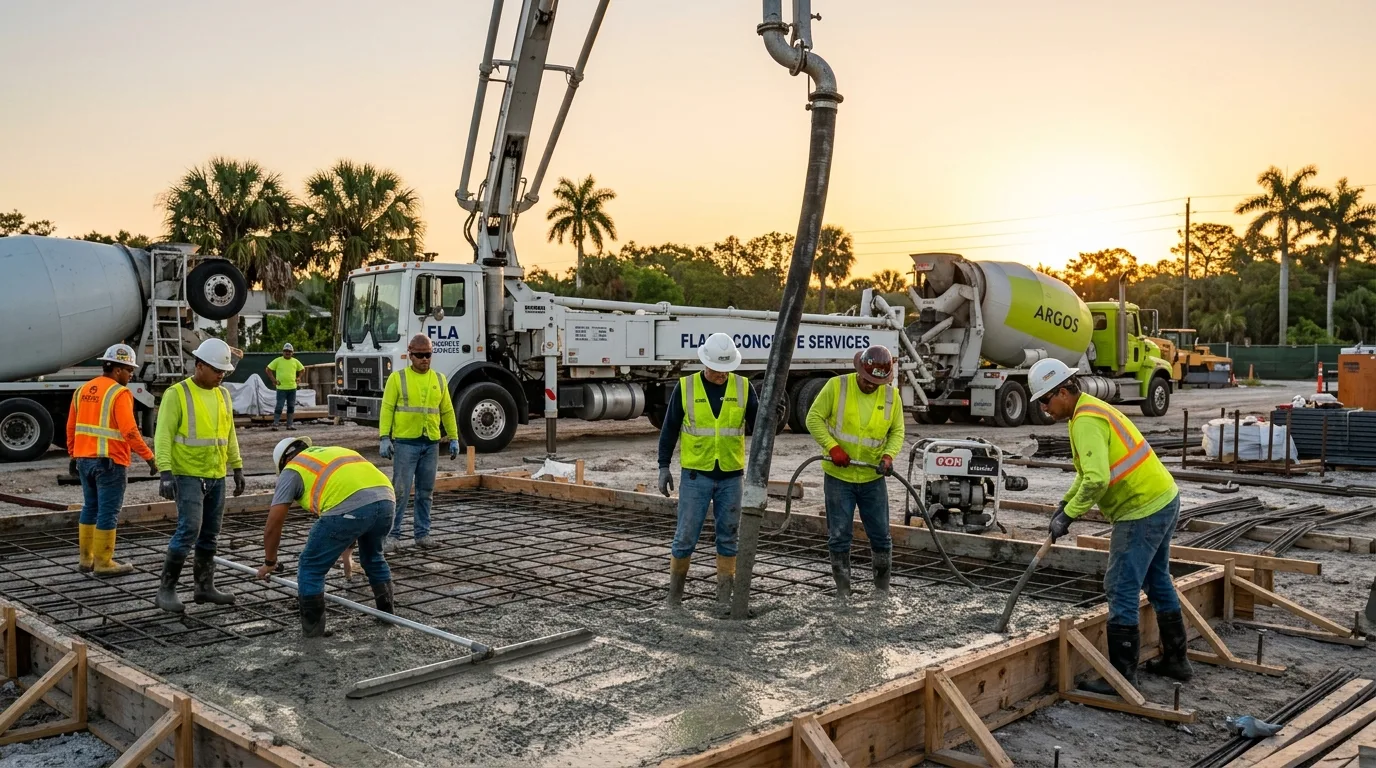
If you’re planning a concrete driveway, patio, pool deck, or slab in the Tampa Bay Area, timing matters more than most homeowners realize. Florida’s climate creates two very distinct windows for concrete work — and knowing the difference can mean the gap between a project that goes smoothly and one that runs into delays, quality issues, or a finished product that doesn’t hold up as long as it should.
Ready to Schedule Your Concrete Project?
Keystone Concrete plans every pour around Tampa Bay's weather. Contact us to get on the schedule.
The Short Answer: October Through April Is Prime Time
For homeowners in Keystone, Pasco County, and the greater Tampa Bay Area, the dry season — roughly October through April — is the best time of year to pour concrete. Here’s why this window is so favorable:
Temperatures in the ideal range: During Tampa Bay’s dry season, daytime highs typically run between 60°F and 80°F. This range is close to ideal for concrete work. Concrete cures best in moderate temperatures — the chemical hydration process that hardens concrete is slowed too much by cold and accelerated too aggressively by heat. The dry season’s mild conditions allow the concrete to set at a controlled pace that produces stronger, more durable results.
Low humidity: Florida’s dry season lives up to its name. Relative humidity drops significantly from summer levels, which means concrete loses surface moisture more slowly and evenly. Controlled evaporation during the finishing and curing phases reduces the risk of plastic shrinkage cracks — the small surface cracks that sometimes appear in the first 24 hours after a pour.
Minimal rain interruptions: Rain during or immediately after a concrete pour is one of the biggest risks contractors face. It can damage the surface finish, dilute the mix, and force last-minute project delays. Between October and April, Tampa Bay averages far fewer rain days than the summer months, making it much easier to predict and commit to a pour date.
Clear scheduling windows: Contractor availability is generally better in the dry season, giving you more flexibility to choose your timing.
For planning purposes, our team typically considers November, December, January, and February to be the absolute sweet spot — mild temperatures, low humidity, and minimal rain combine to create optimal conditions.
Why Summer Is Challenging for Concrete in Tampa Bay
Tampa Bay summers — roughly June through September — present a trifecta of challenges for concrete work:
Extreme Heat
Summer daytime temperatures in Keystone and the Tampa Bay area regularly hit 90°F to 95°F, with heat index values pushing even higher. At these temperatures, the surface of freshly poured concrete can lose moisture so rapidly that proper finishing becomes difficult and the risk of thermal cracking increases. Concrete mixed and placed in extreme heat may develop surface checking and reduced long-term strength compared to concrete poured under cooler conditions.
Daily Thunderstorms
Tampa Bay is one of the thunderstorm capitals of the United States. In summer, afternoon thunderstorms roll through almost daily — often predictably between 2 PM and 5 PM, but not always reliably enough to schedule around. Rain hitting freshly poured concrete before it sets can create surface defects, weaken the top layer, and mar the finish. Every experienced contractor in the area has a story about a pour that got caught in an unexpected storm.
Hurricane Season
June 1 through November 30 is official hurricane season, with the peak risk running August through October. While a direct hurricane hit is a rare event, the extended periods of rain, high winds, and unpredictable weather patterns during peak season create scheduling uncertainty that’s difficult to work around for outdoor concrete projects.
Tips for Summer Pours When Necessary
Sometimes summer is unavoidable — perhaps you have a construction timeline tied to a home addition, or you need the project completed before a specific event. In these cases, experienced contractors use several strategies to get good results:
Early morning pours: Starting at first light (sometimes 5–6 AM) allows the concrete to be placed and initially finished before the worst of the midday heat and the afternoon storm window. Most of the critical work is done by 10 or 11 AM.
Ice in the mix water: Using chilled or ice water to mix the concrete reduces the concrete’s temperature at placement, buying more working time before the surface begins to set.
Set retarders: Chemical admixtures added to the concrete mix slow the initial setting time, giving the crew more working time to properly place and finish the concrete even in high temperatures.
Shade and wind barriers: Covering the pour area with shade cloth or using wind breaks reduces evaporation from the surface, helping prevent plastic shrinkage cracks during finishing.
Curing compounds: Applied immediately after finishing, liquid curing compounds form a membrane that dramatically slows moisture loss from the surface during the critical initial curing period.
Smaller pours: In extreme heat, experienced contractors sometimes break large projects into smaller pours on consecutive days rather than attempting to place everything at once.
Summer Pour? We Know How to Make It Work.
Keystone Concrete uses proven techniques for quality summer pours. Get a free estimate today.
How to Schedule Your Concrete Project in Tampa Bay
If you have flexibility on timing, here’s how to approach scheduling:
Book early for the dry season: Concrete contractors in the Tampa Bay area stay busy year-round, but dry-season slots fill up faster as the summer ends. If you want a November or December pour, reach out to contractors in September or October to get on the schedule.
Build in weather buffer days: Even in the dry season, the occasional rain event happens. When discussing your project timeline, ask your contractor how they handle weather delays — what’s the notification process, and what are the rescheduling options?
Understand the full timeline: A concrete driveway or patio isn’t a one-day project from start to drive-on. Factor in site prep (often a full day), the pour day, and the curing wait (7 days before driving, 28 days for full strength). See our concrete slabs guide for Pasco County for full installation details.
Permits take time too: If your project requires a Pasco County permit (and many do — see our guide to concrete permits in Pasco County), factor permit approval time into your schedule. Straightforward permits often take a few days; others may take longer.
Consider your landscaping recovery: Site prep and concrete work disrupts the area around your driveway or patio. If you care about your landscaping, plan for a season where re-establishing plants and grass is practical.
For more on what makes concrete projects successful in Florida’s climate, see our guides on concrete maintenance in Florida, concrete sealing, and how long concrete lasts in Florida’s climate. Keystone Concrete serves Keystone, Pasco County, Odessa, Lutz, Land O’ Lakes, Wesley Chapel, and the entire Tampa Bay Area.
Get on the Schedule for Your Tampa Bay Concrete Project
Keystone Concrete plans pours around the best weather windows. Free estimates — respond within 24 hours.